Last week end found me travelling to Manchester. Before I went my impression of the place was that it is in the North West so it rains a lot and – they have trams, right?
What a vibrant city! I walked out of Piccadilly Station into a buzzing lively world. Yes, the pavements were a bit damp; yes, I have to use my umbrella more that I would chose to; yes, I was almost run down by a couple of trains running down the road. But look beyond that and you see a city which is a microcosm of exciting, interesting regeneration of old industrial England at its very best. It is not quite Venice but there are a considerable number of canals and the redevelopment of some of the wharfs along the waterways are wonderful. There is everything from old Victorian warehouse conversion to brand new build and for ideas on affordable housing, look no further than Islington Wharf where a company supplies slot-together units in which a family has considerable choice about internal layout whilst costs are attractively low because of the simple base unit construct and mass production – clever!
So what about the art? On Friday I found myself in Caslefield Gallery. Run by artists this is one of Northern England’s most active and successful organisations for developing emerging contemporary artists and practice. Their current exhibition, Real Painting, explores the material components of painting and reminded me a bit of some of the exploratory work which I did with Ruth Franklin on a fabulous course a few years ago at City Lit. It features works by a group of artists which includes Angela de la Cruz, who lives and works in London and is represented by the Lisson Gallery, Jo McGonical from Manchester who is currently undertaking a PhD at Leeds University and David Goerk who works in New York and is represented by Howard Scott Gallery, New York and Larry Becker Contemporary Art, Philadelphia. the impression I had was of a gallery which has a real interest in promoting lively contemporary work from a wide range of people and places and this was magnified by the friendliness of the staff who went out of their way to make a stranger to the city feel welcome.
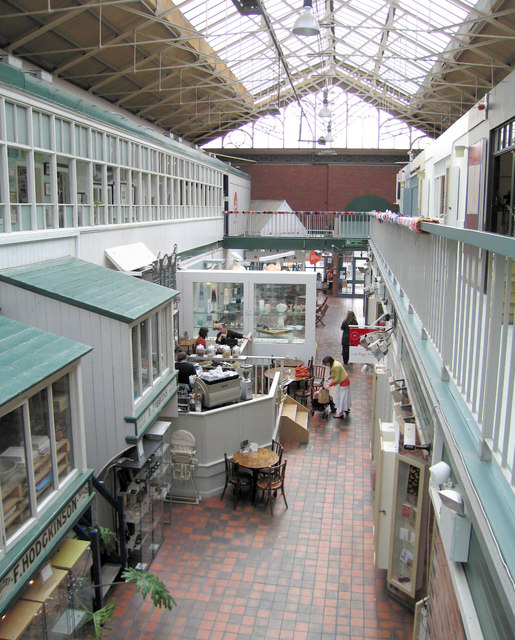
Later I visited the Northern Quarter and discovered the gem which is the Mancester craft and Design Centre. Housed in an old fish market this space is both studio and gallery for about 30 makers. Each artist has their own space the back of which is a studio and the front a shop. Many of the spaces are shared which means that they can be open every day of the week without individual artists having to be present every day. It represents a fabulous model of a place where the artists can interact easily with their customers on a regular basis. An arrangement from which all sides benefit. The café is pretty amazing too!
I was not in Manchester for long and whilst there I had an awful lot to accomplish but I shall return. I have yet to see the Whitworth, Manchester Art Gallery, John Rylands Library, the Lowry Centre or the People’s History Museum – treats in store for a rainy day!
![ab2ed00f563201a378a3056b5b55cc61[1]](https://bridgetmacklin.com/wp-content/uploads/2015/07/ab2ed00f563201a378a3056b5b55cc611.jpg)

 Bridget Macklin