Going Nowhere?

This week a dear friend introduced me to Simon Jenkin’s book England’s Thousand Best Churches.  She did this shortly after I had introduced her to one of the gems of the Roseland Peninsular, the thirteenth century church at St Just in Roseland.  I am particularly fond of this church and so it is one of the places which, when showing visitors for the first time, I take great care to approach from the right direction.  We walked out along the Bar, a spit of shingle which reaches  across the creek, so that she could see the church across the water.  She was appropriately impressed.  A series of ‘wow’s and other appreciative sounds confirmed this.  Later we walked round and into the church.  It is a beautiful and interesting place full of peace and history.  Its creek-side setting and semi-tropical gardens are the icing on the cake.

I was astonished that Jenkins only gives St Just one star and have resolved to explore some of the Cornish churches to which he awards 4 stars in order to compare and contrast.  Turning to the page for the Roseland churches I was shocked.  None of them merit more than one star and Jenkin’s summary of the Roseland is ‘A secret annex which might just as well be called Going Nowhere!’  I would like to add to that, please, Mr Jenkins.
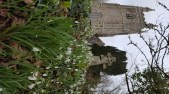
20170211_141959_001
Creed Church.

The Roseland is steeped in history and tales of daring do; its coast is rugged and yet gentle at the same time; its geology is fascinating; its villages have their hearts in tact because they still have sufficiently large residential populations, having been blighted slightly less than some parts of Cornwall by people who own houses but only use them for a few weeks a year.  I could go on and on but, given that one of its charms is that people leave it alone to some extent, I won’t tempt them!
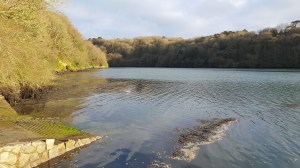
20170314_170351
This is my playground!


Having given Jenkin’s remarks some time to filter through my tatty brain I appreciate their accuracy.  Geography makes his comments completely accurate.  Apart from a couple of ferries there is literally one road in and one road out.
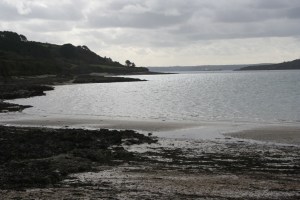
IMG_8652
You don’t come to the Roseland unless you meant to!

You don’t come to the Roseland unless you meant to – and I meant to!  It gives me a sense of well being.  It is my playground.  It inspires my work and I am truly glad that I now have the opportunity to live and work here.

Roseland vessel small
The Roseland inspires my work.


Its a Kind of Magic

Well, it has only taken me about 18 months but at last I have found the time to enjoy reading Edmund de Waal’s book The White Road.  I am glad that I have waited until the right moment as I have been able to indulge myself with soaking up de Waal’s palpable enthusiasm for the subject of porcelain without feeling rushed.

I have had the time and the peace to read most of the book whilst invigilating our exhibition at Fountain Gallery which has its final day today.  Now this says something about the number of sales and visitors to the gallery and begs questions about self invigilated shows.  (Thank goodness for Tregony Gallery which cheerfully goes on selling my work without me putting in an appearance).   But that aside, the luxury of reading a well written book about the porcelain story has been a delight.

There are three lasting impressions from reading this book.  First is the extraordinary excesses which those with money and power went to in the past.  When Augustus the Strong of Saxony died in 1733 he had a collection of 35,798 pieces of porcelain (de Waal, 2015).  Secondly of the heightened emotions which the efforts to create ‘white gold’ in Europe seemed to invoke.  The alchemists searching for the formula for creating gold from base metals and also how to make white gold spent decades working in intolerable conditions, imprisoned and forced to experiment over and over again until they struck success (de Waal 2015).  Thirdly the wonder  with which people have always perceived this material.  De Waal describes the first makings of English porcelain by William Cockworthy as an obsession;

 ” To make something so white and true and perfect, that the world around it is thrown into shadows as the blackthorn does when flowering in the hedgerows in early spring.” (de Waal, 2015, p.225).


Honiton dish 2
Sometimes opening the kiln really does feel like a kind of magic!


Oh my goodness, I get that one!  When I open the kiln and there it is: a crisp, thin, translucent vessel with a pure, creamy whiteness.  It is a kind of alchemy if you ask me!