Every time I finish a good book I find that I need a period of mourning before I can begin another one. Sometimes it lasts for weeks and I find myself feeling completely indifferent to the idea of picking up another one, unless it happens to be relate to the one that I have just read. At long last I have realised that this is what happens when I finish a project in ceramics too. There is a period when I cannot make – don’t even want to make – anything for the next project. I feel stuck! In this particular case I have now spent a couple of weeks observing my fellow students getting cracking on their next ideas with envy. My tutors tell me that it ought to be clear to me which way my work is going, my colleagues seem to think it is pretty obvious too. I am in little doubt either, I just don’t really want to get going. I need to work this thing through. It is like waiting for a train during a rail strike. I know one will turn up eventually but I have no idea when and I am utterly aware that it might not even be going my way when it does roll in. This feeling sets off a sensation of considerable restlessness within me. I want to get going but I can’t start. I am missing the comfort of the last project and yearning for something to get my teeth into but I cannot decide what. I feel unsettled and turbulent. I guess that the unpredictability of almost everything else in my life does not help but I would like to think that would encourage me to immerse myself in my ceramics. Instead of which my heart and lungs have had the benefit – I walked all the way round Richmond Park yesterday; the larder has benefitted – there are 26 jars of marmalade cooling in the kitchen as I write; the garden has benefitted – the Rambling Rector is much reduced in size, the neighbours can see out again, the flower beds are almost tidy and I can see where the gaps that need filling are because the dead stuff from last summer has finally made it to the green bin!


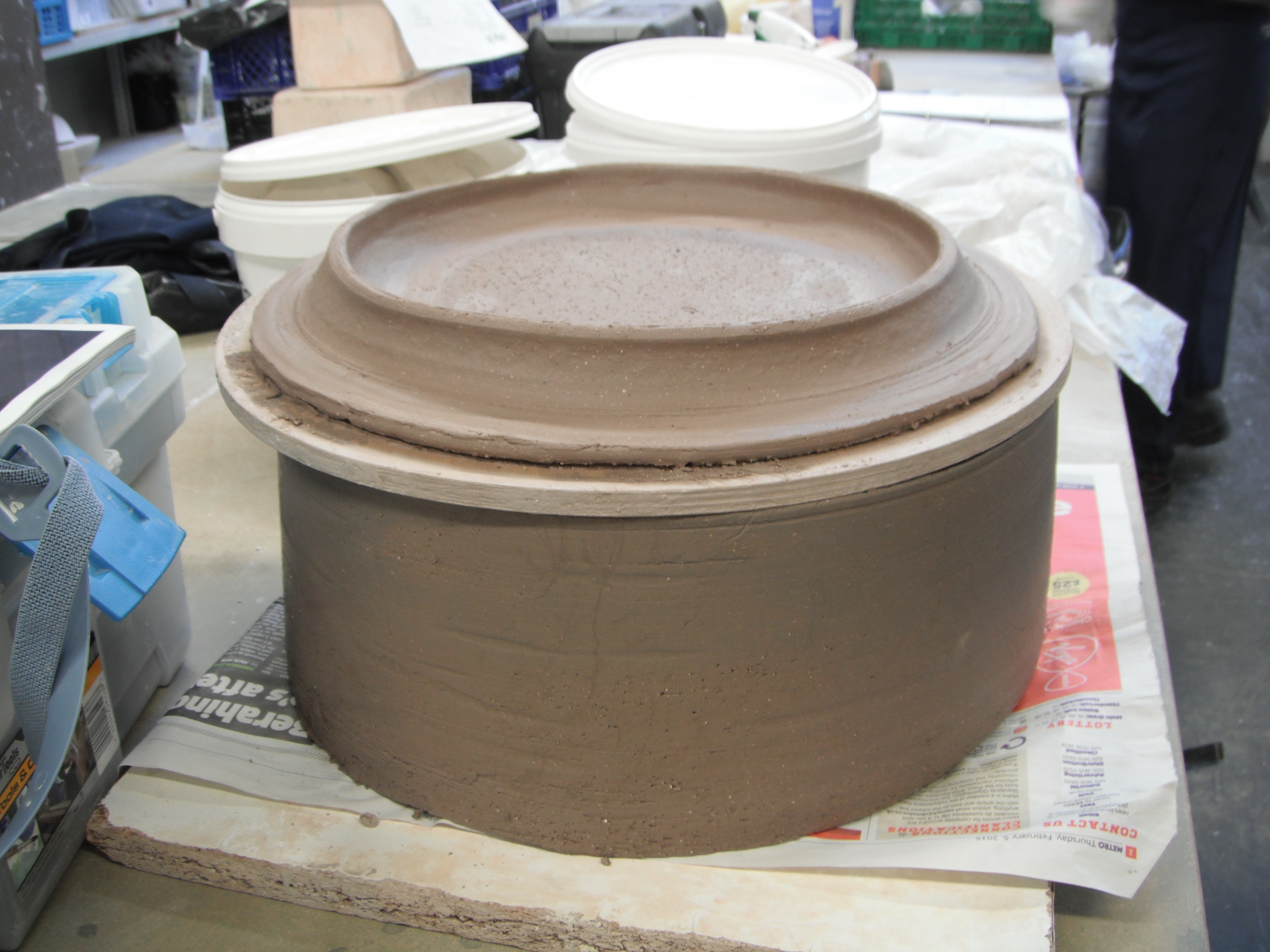
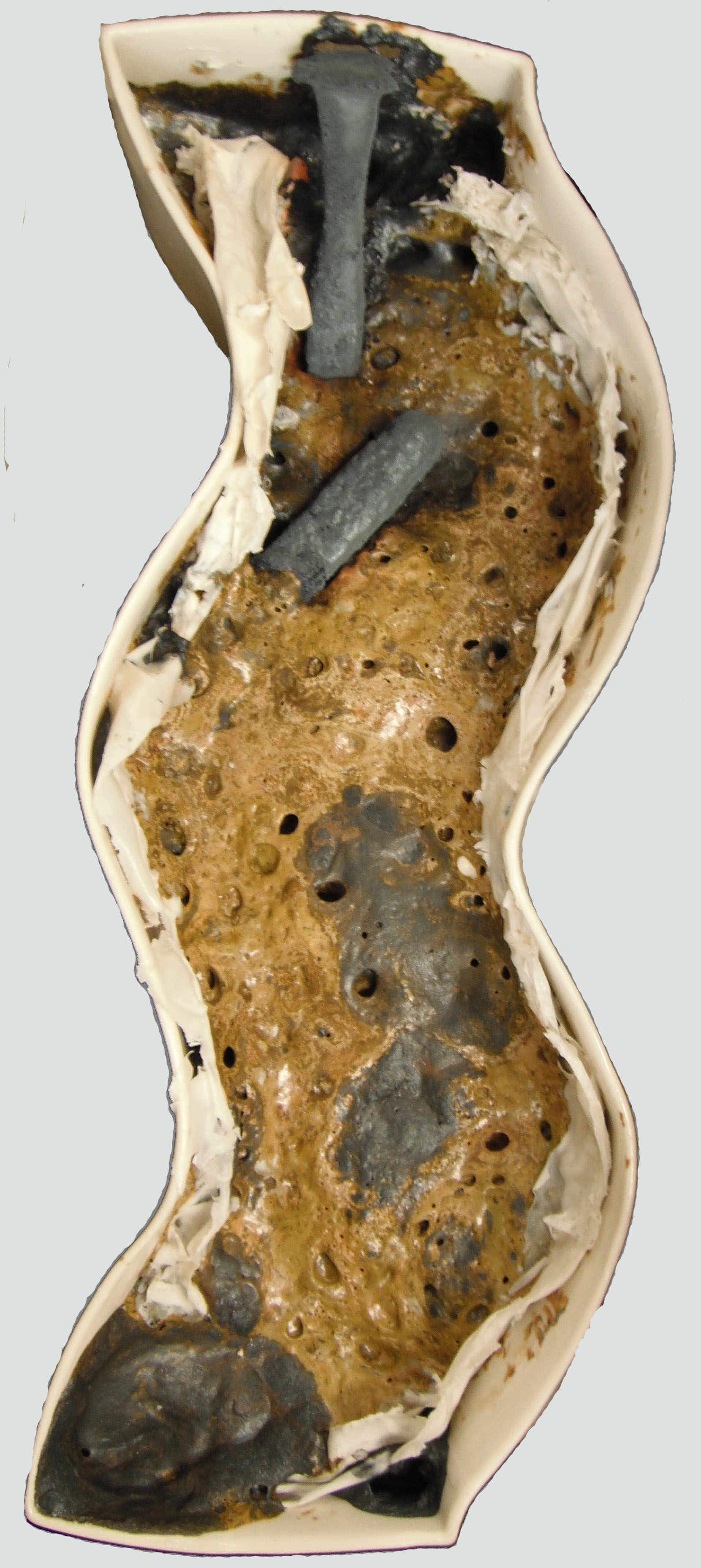
I have not been completely idle from a ceramics point of view. I know that my ‘grungy work’ is never going to be permitted to sit quietly on a shelf in any kiln at college so I have thrown a huge saggar to fire all my work in, I have also begun to experiment with some clay which I found in Cornwall over the New Year. It came out of the ground a delicious ochre colour with great plasticity so imagine my surprise and delight when I fired a piece to discover that it doesn’t melt at stoneware, rather it goes a rich red/brown and self-glazes. I couldn’t believe my luck – the perfect clay???? Then I walked past a group of labourers on Kingsway who were loading clay from a foundation which they were digging into a skip. I stopped and asked if I could have some of it and after some slightly strange looks a gorgeous young Irishman gave me as much clay as I could carry and a bag to put it in! Grunge work coming up soon I hope . . . . . .


I have also been looking at other artists who use found clay in their work. I love the way that Fred Gatley uses clay from Deptford Creek to create evocative landscape pieces. His simple use of a plinth and a contrasting bowl is incredibly effective. Here he describes his method of working for an exhibition at the gallery Bils and Rye in Yorkshire:
“Within each piece, I strive to achieve a balance of form, scale, structure and texture, producing work that has an understated visual richness set against a feeling of quiet simplicity.” http://www.bilsandrye.com/
And of course, the doyenne of found objects in ceramics was Gilliam Lowndes. What can one say about her gorgeous piece, Cup On Base except ‘Wow!’




 Bridget Macklin