Moving house is proving very traumatic. It is not so much the sorting, tidying and packing that is getting me down. It is more the trips to the dump. How on earth did I accumulate so much rubbish in the short time that I have lived in London?
The scary thing is that so much of what I have taken down to add to landfill is as a result of my ceramical activity; not something about which I feel terribly clever.

The problem with ceramics is that, once fired, they last for ever which is why they are so useful historically. I wonder if, in the millennia to come some poor archaeologist is going to be subjected to sifting through a deep hole in south east England and will happen upon the efforts of my ceramics misadventures!
Fair enough, you can’t make an omelette without breaking eggs but when I think about the number of trips that I have done with car loads of experiments and errors over the past few weeks it drives home the responsibility that we all have to think before we fire. I realise that the fact that much of this work was created as a part of my Diploma and from which I learned a huge amount mitigates this waste to some extent but at what cost? I suppose there are a number of questions that we should ask ourselves each time we load a kiln.
- What do I expect to achieve in this firing?
- What is the likelihood of achieving it?
- Which pieces already look like a triumph of hope over expectation?
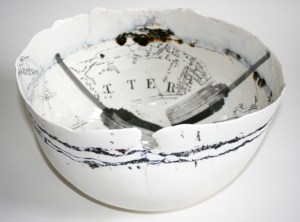
![article-1104741-017C6CA2000004B0-617_468x286[1]](https://bridgetmacklin.com/wp-content/uploads/2016/07/article-1104741-017c6ca2000004b0-617_468x2861.jpg?w=620) http://www.dailymail.co.uk
http://www.dailymail.co.uk
I am not suggesting that we should not experiment, Heaven forbid! Indeed I adhere to the view that every firing should include some kind of experimental piece. I am simply suggesting that all of us have a responsibility to care for our planet and that as ceramic artists we are sending the planet a double whammy which makes it even more important that we examine our consciences on a regular basis: We plunder our natural resources in order to make work which, if we are not happy with, we throw away where it adds to the problems of landfill.

 Bridget Macklin